York is about as big a city as you'll find on this site. It makes our list because of its walled-in medieval feel, cobblestone pedestrianized old-town, and multitude of fascinating sites, all within walking distance of each other.
York Minster (Cathedral) is, in our opinion, one of England's finest, second only to Cantebury. It's the largest cathedral in Northern Europe and you get that sense wandering around inside. Try to catch a concert to experience an extra dimension of its mystical power.
Betty's Tea Room is famous across England. Expensive but worth it. (For cheaper fare there is a handfull of pubs that do 2 for £10 specials and serve pretty decent food)
Walking the three miles atop the medieval City Wall is a great way to get a feel for York's layout, work in some exercise, capture a unique view of the cathedral, and experience the city's medieval roots.
The pedestrianized Old-town is chockablock full of small shops, street performers, fine restaurants and tea rooms, and old buildings. Have a stroll and imagine you are living 700 years ago.
York's Train Museum, housed in the spectacular train station, is the best and biggest of its kind in England. If you are into trains do NOT miss it.
The many Ghost Walks on offer in York play up the city's history of hauntings. Well worth the tenner it will cost you.
Recommended Hotel: The Bar Convent lies just outside one of the city gates and is the real deal. Still a convent but the nuns are all so old now that they need an extra source of income, so they turned to hospitality. The chapel and glass-roofed courtyard where they serve tea and breakfast are alone worth the stay. Choose a room named after your favorite saint (we chose Laurence, the patron saint of students and barbecues), but book in advance as this is a popular place to stay.
Recommended Reading:
Showing posts with label Ghosts. Show all posts
Showing posts with label Ghosts. Show all posts


Whitby Abbey

The view to the North features the medieval town of Whitby. Now a thriving and unique modern city, you'll find every amenity there and plenty to do and see. Check out their website for a complete list.
We strongly recommend visiting in April or October during the Whitby Goth Weekend. Witness hoards of fully-clad goths strutting around the city and abbey and posing for the mass of photographers. What an experience!
Suggested Reading:
Suggested Movies:
Canterbury Cathedral
Canterbury is a quintessential cathedral and one of our favorites. It's set in the center of pedestrianized, cobblestone Canterbury town, which still maintains its Medieval flavor. The Cathedral itself is huge, dramatic, home to lots of interesting relics, and of course a famous murder site (Thomas Becket in 1170). An audio guide walks you around the cathedral pointing out the coolest stuff.
Recommended Movies:
Recommended Movies:
Hastings Battlefield
It's the site of the epic 1066 Norman Invasion. After checking out the museum, wander the battlefield and imagine the bloodshed!
Warwick Castle and Warwick town

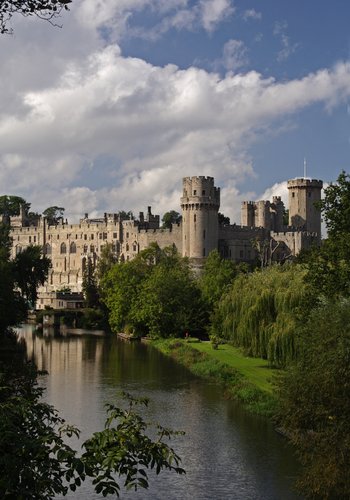
Warwick Castle (avoid embarrassment by pronouncing it correctly: "War-ick"), the largest castle in England still in one piece, is a grand piece of architecture and history! The Earls of Warwick, who lived at this castle, have historically been some of the most powerful nobles in English history, at times even more powerful than the king himself!
Warwick castle was a private residence for centuries, famous in the Victorian era for extravagant parties and being the center of aristocratic gossip and scandal. Now it is open to the the public, furnished as it was in its Victorian heyday, and you (yes, you!) can wander the grounds, the house, the guard towers, the torture chamber, with your imagination (and costumed re-enactors) conjuring up a dramatic past. Warwick castle is one of the most popular tourist sites outside of London, and it actually deserves it. So cool!
Warwick, the town around the castle, is also very historic and has managed to preserve its Medieval flavor nicely. Wandering around Warwick is like stepping back in time. Plenty of museums, parks, horse races, antique shops, and--of course--ghost tours await you. Our first visit to Warwick is what actually inspired us to move to Warwickshire later. You'll love it!
Extras:
The Mill Garden. There's a gorgeous garden along the river below the castle, with a great view. Escape the crowd and take an extra hour there to unwind, reflect and soak up the English countryside.
For an extra awesome view of the castle rent a rowboat from St. Nicholas Park upstream of the castle and row practically right up to the castle walls.
There's a good ghost tour that runs a few nights a week. Coordinate your timing if you're into it!
Recommended Reading:
Terry Deary's Horrible Histories: Stratford-upon-Avon (fun kid's history book that actually talks a lot about Warwick)
About the legend of Guy of Warwick, here.
Minster Lovell Hall

When he saw Richard die in battle, Lord Lovell knew he was totally screwed and headed for the hills. He was one of the richest guys in England, at least until the moment Richard was run-through with a sword, but he knew that all of his wealth and property would be seized by the new king, and he himself would be executed in a manner like unto Braveheart. So he ran to one of his more out-of-the-way houses, Minster Lovell Hall, hoping to buy some time while they searched all his bigger mansions. It’s in a really lovely spot, by a pretty stream in a tiny village. I would hate to go to such a peaceful spot knowing full well that I was likely soon going to have my intestines pulled slowly out of a hole in my belly while I screamed. But I digress. He had to hide. Like really really hide. He had a small secret room made in his house that was only accessible through a secret door with a secret key. He dismissed all his servants, retaining only his most loyal old butler. He gave this most loyal butler the key and tucked himself away in the secret room. For years and years he lived locked away in a claustrophobic little place, and his butler would sneak him some food everyday.
Better than execution, I suppose, but then the old butler died. And there was no one around to tell about the secret room or the secret key or the secret Lord in there who needed to be fed. And Lord Lovell, locked inside, slowly starved to death!
That was the story anyway. People talked about it for a couple hundred years after the fact, but no one really thought it was true. Then in 1708, while doing some remodeling, the owners of the house knocked down a wall and discovered a secret room -- and a human skeleton inside! (And also the skeleton of a dog; he must’ve had some company.)
Since then the house has become a skeleton itself. But it’s still by a beautiful stream, in a hauntingly serene and pretty spot. It’s another one of those smaller attractions (with no tourists in sight) that is just as impressive/creepy as, say, the Tower of London with its skeletons of children in the stairs. Speaking of which, who sealed those boys in the stairs? Lord Lovell perhaps.
Recommended Reading:
Subscribe to:
Posts (Atom)